
Session
AI for Complex Medical Procedures: From Robotic Assistance and Clinical Decision-Making to Training the Next Generation
Organized by:
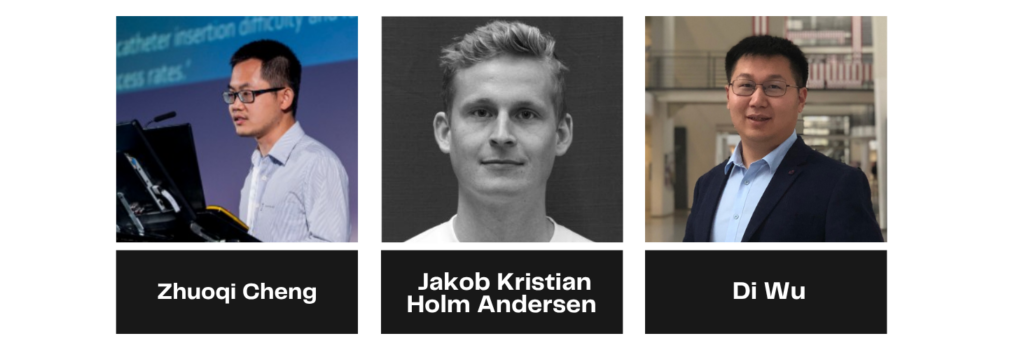
Thursday 8 October 15.15
Lead organizer: Zhuoqi Cheng, University of Southern Denmark
Artificial intelligence is transforming healthcare by supporting medical procedures from diagnosis and planning to intervention and education. AI technologies can assist clinicians through robotic automation, real-time guidance, medical imaging analysis, and data-driven decision support, improving precision, safety, efficiency, and patient outcomes.
This workshop brings together researchers, clinicians, and industry practitioners to explore how AI can augment human expertise in healthcare. Through interactive demonstrations, participants will experience applications in robot-assisted interventions, AI-driven diagnosis and decision-making, and intelligent training systems. The workshop will foster discussion on translating AI innovations into clinical practice and medical education.
Welcome (5 min)
A brief welcome and introduction to the overall theme: how AI-enabled systems can support medical procedures, clinical decision-making, robotic intervention, and healthcare training. The organizers will introduce the objectives of the session, the format of the workshop, and the expected outcomes for participants.
Short pitches (30 min)
3-minute pitch for each demonstration presenter to introduce the clinical needs, proposed AI solution, the role of data & algorithms, the current stage, and remaining challenges.
Interactive demonstration (45 min)
Participants will interact with the systems, discuss practical implementation issues, and reflect on the opportunities and limitations of AI in current clinical or medical educational workflows. The discussion will be guided by a set of prepared questions, focusing on AI techniques, trust, interpretability, human-AI collaboration, safety, and implementation challenges.
Conclusion dialogue (10 min)
The participant shares their options for the guided questions. The session will close with a short synthesis by the organizers.
Intermediate: For attendees who have basic understanding or some experience with the subject but are not yet advanced.