
Session
Conversational AI and Youth Mental Health: Mapping Risks, Safety and AI Literacy
Organized by:
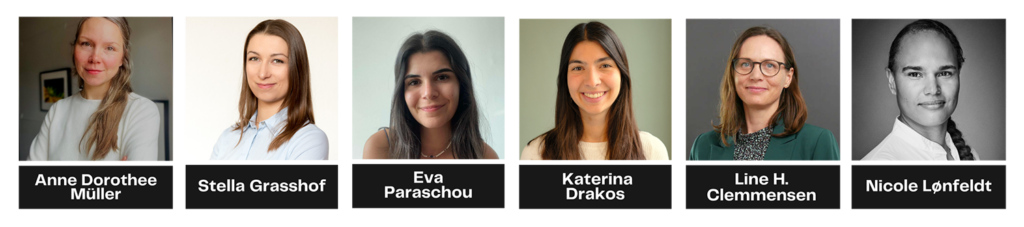
Thursday 8 October 15.15
Lead organizer: Anne Dorothee Müller, researcher, Child and Adolescent Mental Health Center, Copenhagen University Hospital Capital Region in Denmark
Youth mental health is a global crisis. Yet demand for support exceeds service capacity. Concurrently, young people are turning to general-purpose conversational AI for social and emotional support. These systems, however, have not been evaluated against real-world, representative benchmarks that include vulnerable youth, despite their potential detrimental psychological and social effects. Health agencies therefore call for responsible, child-centred design, human oversight and AI literacy.
This interactive and interdisciplinary workshop addresses two questions: What AI literacy promotes safe use of conversational AI in mental health contexts? What technical risks should be identified, escalated and reviewed in practice? Collaboratively, participants will identify practical principles for AI literacy, risk assessment and responsible AI design to guide developers, practitioners and policymakers.
This 90-minutes interactive and interdisciplinary workshop seeks to identify key principles for AI literacy and responsible AI design within mental health. After the workshop, an interdisciplinary team will use the session outputs as a starting point for developing recommendations for guidelines for AI literacy in the context of Danish youth mental health.
Welcome and structure (5 min)
Presentations (25 min)
–
Small-group discussions and online polling (15min)
(interdisciplinary) on key technical and psychological challenges in young people’s use of GenAI for mental health support
Small-group discussions and online summarization (15min)
(interdisciplinary) on key themes, solutions and recommendations on young people’s use of GenAI for mental health support.
Plenary discussion and online polling (25min)
on solutions and recommendations for AI literacy for youth mental health, prioritized by participants, to identify emerging areas of consensus, disagreement or uncertainty.
Closing and invitation for further collaboration (5min)
Intermediate: Suitable for attendees with basic understanding or experience in psychology, behavioral science, human-computer interaction or computer science who want to solve societal challenges in an interdisciplinary environment.