
Session
Data Science of Human-centric Mobility
Organized by:
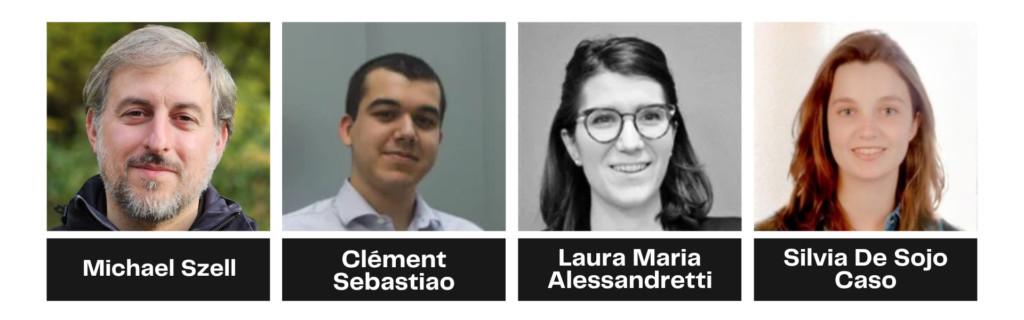
Thursday 8 October 11.00
Lead organizer: Michael Szell, Associate Professor, ITU Copenhagen
This 90-minute workshop will bring together professionals from data science and network science who research human-centric mobility and who develop software applications, and everyone else who is interested in the topic and its applications, especially in the context of the green transformation in Denmark.
The workshop will feature few short, engaging scientific talks on the topics of human mobility and bicycle networks, an interactive hands-on session to introduce the open-source Python software suite BikeNetKit with interactive visualizations, and discussion sessions in-between, for an audience to engage in diverse ways with the state-of-the-art of the field.
00-05 Welcome
Session Organizers
05-20 Invited talk: Emotional Cities
Carlos M. Lima Azevedo, Assoc. Prof., DTU
20-25 Lightning talk 1: Modelling Urban Mobility with large-scale smartphone data
Laura Alessandretti, Assoc. Prof., DTU
25-30 Lightning talk 2: Gendered Mobility: Insights from large-scale behavioral data
Silvia de Sojo Caso, Postdoc, DTU
30-45 Open discussion 1
All session participants
45-65 Hands-on session: BikeNetKit
Manuel Knepper, Research Assistant, ITU & Michael Szell, Assoc. Prof., ITU
65-70 Lightning talk 3: Ordering the growth of urban bicycle networks
Clément Sebastiao, PhD student, ITU
70-75 Lightning talk 4: Algorithmic Bicycle Node Network Assessment
Michael Szell, Assoc. Prof., ITU
75-90 Open discussion 2 & Conclusion
All session participants
Our content will cover mostly an intermediate level for an audience familiar with basic concepts, but all our sessions will aim to avoid technicalities and jargon to also reach beginners and non-academics, for maximum possible inclusion. We will design the hands-on session in a way that also non-technical participants or those who just want to watch can follow along and get much out of the session easily – installing / running software will not be a necessary requirement.