
Deep Dive Workshop
Re-connecting science and practice in support of more and better user involvement in IT development
Organized by:
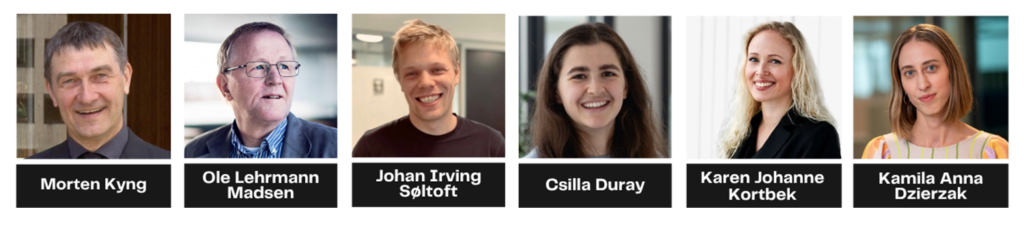
Friday 9 October 10.00
Lead organizer: Morten Kyng, Professor, Computer Science, Aarhus University
Research and practice have shown that user involvement is a way to develop better systems, more inclusive systems and usually doing so faster and cheaper.
Despite potential benefits most projects have little or no user involvement, and in discussions with practitioners, we often encounter a lack of understanding of basic ideas e.g.:
–
Part of an explanation may be found in current participatory design research, which often has a focus on democracy.
Democracy is important, but it is not a primary concern in most IT-projects. We want to re-connect research to practice, and we believe that a good starting point is a focus on the basic ideas in the bullet list above.
Intro and background 15 min
The Danish User involvement initiative initiated by ATV, DIREC and Dansk IT – The first years
Morten Kyng, Professor, Computer Science, Aarhus University & Ole Lehrmann Madsen, Professor, Computer Science, Aarhus University
Presentation of the participants 15 min
Developing an interactive floor for learning – a case on children involvement 13 min
Karen Johanne Kortbek, Principal User Experience Specialist, ph.d., The Alexandra Institute
Preconceptions of Participation: Municipal Care Professionals’ Expectations of Co-design Processes 13 min
Kamila DzierzakI, IT University of Copenhagen
Short break 10 min
Involving users to model perspectives in public transportation planning 20 min
Csilla Duray, PhD student, Science and Technology Studies, Technical University of Denmark & Johan Søltoft, Postdoc, Science and Technology Studies, Technical University of Denmark.
Short presentation of the workshop session after lunch: 2 min
Lunch break 60 min
Workshop session on barriers and opportunities 70 min
–
Next steps 20 min
How to re-connect science and practice in support of more and better user involvement: The participants suggest and prioritize
Intermediate: For attendees who have basic understanding or some experience with the subject but are not yet advanced.