
Deep Dive Workshop
Security, Safety, and Privacy in AI: Cross-disciplinary Perspectives on Trustworthy AI
Organized by:
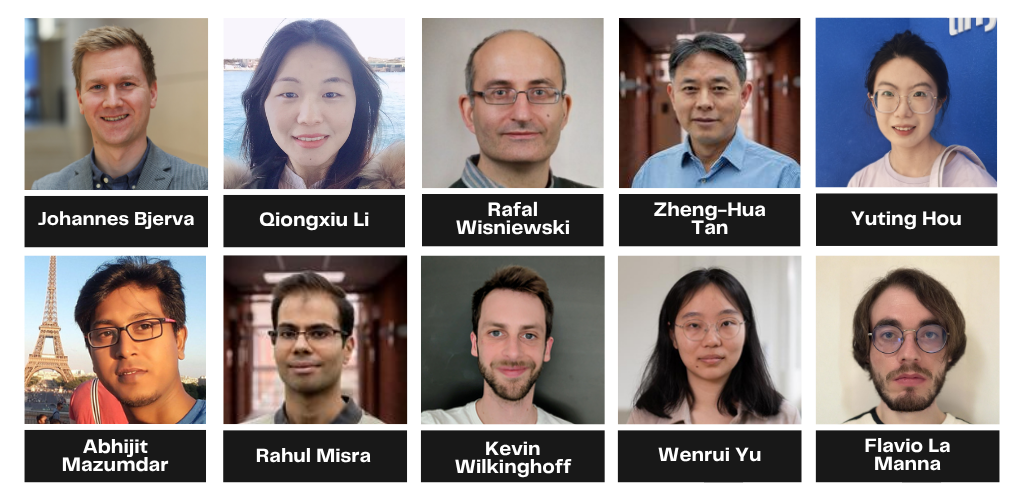
Friday 9 October 10.00
Lead organizer: Johannes Bjerva, Professor of Natural Language Processing and Artificial Intelligence, Aalborg University, Department of Computer Science
AI systems can break in unexpected and interconnected ways. A privacy leak may be enabled by language, an adversarial perturbation may trigger unsafe behaviour, and rare instabilities may emerge only after deployment. This interactive workshop combines perspectives from dynamical systems, privacy-preserving machine learning, NLP, and adversarial robustness to examine how AI vulnerabilities arise, how they can be detected, and what meaningful mitigation or guarantees might look like.
Through expert inputs, structured discussion, and hands-on vulnerability mapping, participants will explore topics such as privacy inference, prompt manipulation, multilingual jailbreaks, data poisoning, adversarial speech, and rare catastrophic failures. The goal is to build a shared vocabulary, map complementary methods, and identify new opportunities for collaboration on trustworthy AI.
10:00 – Welcome and framing
Brief introduction to the Security, Safety, and Privacy in AI consortium, the motivation for the workshop, and the relevance of the topic for the D3A community. The framing will introduce the workshop’s central structure: understanding AI vulnerabilities, detecting them, and developing mitigation strategies or guarantees.
10:05 – Lightning research perspectives
Four short research-group pitches will introduce complementary perspectives from the participating research groups. Each pitch will focus on one central vulnerability perspective, the methods used to study it, and the open challenges it raises.
–
10:45 – Structured mingling: What counts as an AI vulnerability for you?
Participants will take part in a structured mingling exercise designed to establish a shared cross-disciplinary vocabulary. Participants will discuss how their fields define AI vulnerabilities, which forms of failure they consider most serious, and what kinds of evidence or guarantees they consider convincing. The exercise is intended to connect perspectives across the participants’ areas and facilitate discussions about collaboration.
Moderated by Yuting Hou, Abhijit Mazumdar, Rahul Misra, Kevin Wilkinghoff, Wenrui Yu, and Flavio la Manna.
11:05 – Research Deep-dive
An invited speaker will provide external perspectives on AI security, safety, privacy, or trustworthy AI. The talk will connect the consortium’s research themes to broader developments in the field and to the interests of the D3A community.
–
11:30: Lunch
12:30: Shared methods and collaboration points
Participants will continue in small groups to identify methodological overlaps and possible collaboration points across the perspectives presented in the workshop. The aim is to identify where cross-disciplinary collaboration could lead to stronger approaches for understanding, detecting, and mitigating AI vulnerabilities.
Moderated by Yuting Hou, Abhijit Mazumdar, Rahul Misra, Kevin Wilkinghoff, Wenrui Yu, and Flavio la Manna.
13:10: Future vision synthesis
Rafal Wisniewski will present a forward-looking synthesis on Classical Dynamical and Stochastic Systems as Tools for Safe AI. This session will connect the workshop themes to mathematical tools such as dynamical systems theory, stochastic stability, certificates, and rare event analysis, and outline how these tools can contribute to principled approaches to AI safety.
13:30: Group debate
Participants will work in small interdisciplinary groups and debate the position set forth in the Future Vision Synthesis. Each group will divide into those “for” and those “against” the position, and debate. The output will be a shared map of AI vulnerabilities and cross-disciplinary methods relevant to the D3A community.
Moderated by Yuting Hou, Abhijit Mazumdar, Rahul Misra, Kevin Wilkinghoff, Wenrui Yu, and Flavio la Manna.
13:55: Wrap-up
Final synthesis of key takeaways, possible collaborations, and future activities within the Security, Safety, and Privacy in AI consortium and the broader D3A community. The wrap-up will identify concrete next steps emerging from the structured mingling, vulnerability mapping, and group discussions.
Intermediate: For attendees who have basic understanding or some experience with the subject but are not yet advanced.