
Session

Supercomputing: Challenges & Agents

Organized by:
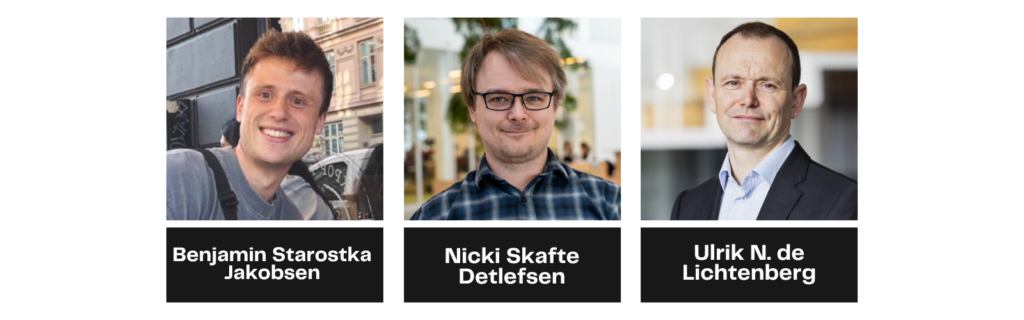
Thursday 8 October 11.00

Lead organizer: Benjamin Starostka Jakobsen, Pioneer Centre for Artificial Intelligence

Most data-driven research runs on shared high-performance compute, and the frictions are familiar across every domain: getting jobs to run, managing environments, waiting in queues, debugging at scale. GenAI agents bring a new strand, with fresh demands on the systems and tooling that may ease some of the old pain.

Come tell us what slows you down. A few short talks will set the stage, touching on the evolving demands of AI workflows, cluster operations, and resource management. The rest of the 90 minutes is yours: small-group breakouts and a moderated synthesis that turn what you bring into feedback for providers and practices we can borrow from each other.

Researchers, HPC operators, and AI practitioners are all welcome; no deep expertise in either world assumed. We hope what surfaces proves useful for our own resources, the providers we work with, and the wider ecosystem.

Programme

Welcome (5 minutes)
Organizers set the guiding question and ground rules for the breakouts.

Section 1 – Invited talks (30 minutes)
Three short presentations introducing distinct perspectives on running research workloads on shared HPC:

  • Agentic HPC: GenAI and sustainability. Claudio Pica, SDU eScience Center (UCloud).
  • Operating HPC: Hosting research at scale. Ulrik N. de Lichtenberg, Danish Centre for AI Innovation (Gefion).
  • Shared HPC: Effective sharing of GPUs. Pınar Tözün, IT University of Copenhagen.
  • 10 minutes each, back-to-back. Each speaker ends on an open problem; clarifying questions are pooled into the breakouts rather than squeezed into a 1-minute Q&A.

Section 2 – Interactive activities (55 minutes)

  • Small group discussions (20 minutes).
    Interdisciplinary groups of 5–6 mixing AI researchers, HPC operators, and domain users. Each group works from a one-page facilitation canvas with three sections: friction on shared compute, missing tools or practices, and two pain points plus one wish.
  • Group reporting (20 minutes).
    Each group reads out their two pains and one wish; a scribe captures them on a shared board.
  • Moderated synthesis (15 minutes).


Speakers’ list
  • Claudio Pica, Director, SDU eScience Center, University of Southern Denmark: Agentic HPC: GenAI and sustainability

  • Ulrik N. de Lichtenberg, Director of Scientific Projects, Danish Centre for AI Innovation (Gefion): Operating HPC: Hosting research at scale

  • Pınar Tözün, Associate Professor, IT University of Copenhagen: Shared HPC: Effective sharing of GPUs
Level

Intermediate: For attendees who have basic understanding or some experience with the subject but are not yet advanced.

Organizers
  • Benjamin Starostka Jakobsen, Pioneer Centre for Artificial Intelligence, bstja@dtu.dk (Lead organizer)
  • Nicki Skafte Detlefsen, Technical University of Denmark, nsde@dtu.dk
  • Ulrik N. de Lichtenberg, Danish Centre for AI Innovation, ulrik.de.lichtenberg@dcai.dk